


Knowing your style is just the beginning, understanding other’s style is the ultimate relationship flex!

Imagine your phone lighting up on a quiet afternoon. A message arrives, maybe it’s a quick “thinking of you,” maybe it’s a long paragraph, maybe it’s nothing at all. Somewhere in that moment, without realizing it, you’re already interpreting what it means.
Before you read through these communication styles, pause for a second and think about how you actually reach for people. Do you send little updates throughout the day? Do you wait until you have something meaningful to say? Do you ask a lot of questions when something feels off? Do you need plans to feel secure? Do you respond when you have the mental capacity to respond well? Do you need space before you can even find your words?
Everyone thinks they are being reasonable. The person who wants a good morning text thinks consistency is basic care. The person who needs space thinks autonomy is basic respect. The person who wants a plan thinks follow-through is basic maturity. The person who replies when they have capacity thinks flexibility is basic adult life. The person who asks fourteen clarifying questions thinks they are creating emotional safety. The person who wants one deep conversation instead of twenty tiny updates thinks they are protecting the meaning of connection.
And then everybody sits around confused, irritated, and personally offended because somehow the people they love did not receive the instruction manual for “how communication obviously works.” That is where so many relationship conflicts begin.
People do not usually experience their communication style as a style; they experience it as common sense. So when someone communicates differently, it can feel like disrespect, avoidance, neediness, pressure, immaturity, or chaos. Sometimes someone really is being disrespectful. Sometimes someone really is being avoidant. Sometimes someone really is asking for more access than the relationship can hold. But a lot of the time, the conflict starts because two people are using different communication rhythms and both of them think their rhythm is the normal one.
So let’s talk about it — not as a personality test, not as a diagnosis, and not as another excuse to call your ex emotionally unavailable in a slightly more educated font. Let’s talk about communication styles as patterns, because these patterns can show us how people seek connection, manage uncertainty, protect their autonomy, and try to feel loved without losing themselves.
Communication Is More Than Talking
People love to say, “Communication is key.” Sure. But that sentence has been dragged through enough bad relationships to deserve a retirement plan.
Communication is not just talking more. Some people talk constantly and still avoid the truth, while others say very little and communicate beautifully through consistency, presence, and follow-through. Communication includes timing, rhythm, emotional tone, how fast someone responds, how much detail they share, how often they check in, how they ask for reassurance, and what they do when they feel overwhelmed.
In interpersonal relationship psychology, this matters because people experience connection through responsiveness. Harry Reis, Margaret Clark, and John Holmes have written about perceived partner responsiveness, which is essentially the sense that someone understands you, validates you, and cares about what matters to you. That does not always require a grand speech; sometimes it is a thoughtful reply, remembering something small, or simply not treating someone’s emotional needs like an annoying pop-up ad.
Attachment theory also matters here. John Bowlby argued that early relationships shape our expectations about whether others are safe, available, and responsive, and Mary Ainsworth later helped identify attachment patterns through her work. Adult relationships are not a simple copy and paste of childhood, but our histories absolutely influence what we interpret as closeness, distance, rejection, pressure, or safety.
This is why one person can see silence as peaceful while another experiences it as emotional distance, why one person sees planning as care while another feels pressure, and why one person sees questions as connection while another feels interrogated. The behavior matters, but the meaning attached to the behavior matters too.
The Daily Check-In
The Style
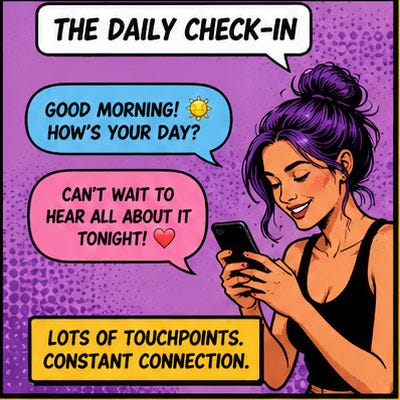
The Daily Check-In person feels connected through small, steady touchpoints. They like a good morning text, a tiny update, a random meme, or a quick “thinking of you” — little signals that say, “You exist in my world even while life is happening.” This style is built on emotional continuity, where the smallness itself becomes part of the intimacy.
Nobody is asking for a dramatic love letter before breakfast or a full itinerary with timestamps and supporting documentation. The Daily Check-In person usually just wants a thread of connection running through the day. For them, silence may not feel neutral; it can feel like distance, like being forgotten, or like the relationship has gone a little cold around the edges. That does not make them automatically needy — it makes them someone who feels loved through consistency.
Why Someone Might Communicate This Way
Someone may develop this style because consistency helps their nervous system relax. They may have had past relationships where silence meant withdrawal or emotional drift, or they may simply want a relationship to feel alive within the ordinary rhythm of the day. Sometimes it comes from a genuine love of small rituals, where a simple message or shared moment carries real meaning.
John and Julie Gottman’s work on bids for connection fits here. A bid can be small — a comment, a question, a joke — and daily check-ins are often made of these small doors into connection.
Most Compatible Styles
The Daily Check-In often works well with the Planned Connector because both value consistency, creating a relationship that feels steady and cared for. It can also work with the Over-Communicator when both enjoy frequent contact, though boundaries are important so that small moments do not spiral into over-analysis. The Real-Time Responder can also be compatible if they offer small acknowledgments, because even a quick “I saw this and will answer later” can prevent unnecessary tension.
Where It Can Clash
The Daily Check-In may struggle with the Space Enthusiast, where one person seeks connection through contact and the other through distance. It can also clash with the Quality Over Quantity person, where one sees small messages as care and the other sees them as noise.
The Over-Communicator
The Style
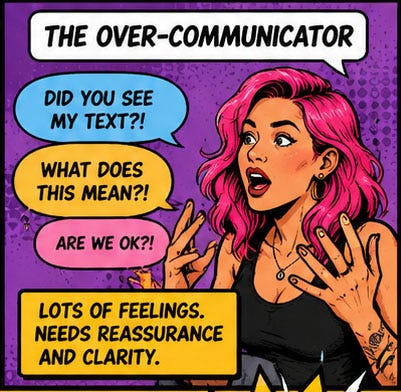
The Over-Communicator wants clarity, reassurance, and emotional information. They ask questions, notice shifts, and want to understand what just happened, what a tone meant, or why the energy changed. At their best, they are emotionally brave, willing to name what others avoid and address tension before it grows.
Why Someone Might Communicate This Way
This style often develops because ambiguity feels unsafe. Someone may have learned to scan for emotional changes in unpredictable environments or relationships where truth was avoided. Sometimes it comes from anxiety, sometimes from being under-informed, and sometimes from being the only person willing to acknowledge discomfort.
Attachment theory can help explain this without reducing it to labels. People with more anxious tendencies may seek reassurance quickly because uncertainty feels threatening. The challenge arises when information-seeking becomes overwhelming, turning connection into pressure.
Most Compatible Styles
The Over-Communicator can pair well with the Daily Check-In, where frequent contact reduces guesswork. The Planned Connector can also be a strong match, as structure can calm urgency. The Quality Over Quantity person can work if deeper conversations happen consistently.
Where It Can Clash
This style may struggle with the Real-Time Responder, where delayed replies feel like avoidance, and with the Space Enthusiast, where one seeks closeness and the other needs distance.
The Planned Connector
The Style
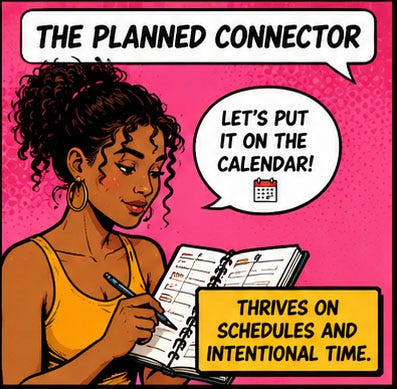
The Planned Connector feels loved when communication and time are intentional. They like knowing when they will see someone, when conversations will happen, and that plans will be followed through. They are not trying to turn love into a meeting; they are trying to make sure connection actually happens.
Why Someone Might Communicate This Way
This style often develops from experiences where unplanned connection became neglected connection. Planning provides clarity and a sense of security, giving the relationship a defined place in real life.
Most Compatible Styles
The Planned Connector pairs well with the Daily Check-In and the Quality Over Quantity person, creating a balance between consistency and depth. It can also work with the Real-Time Responder when expectations are clear.
Where It Can Clash
It may struggle with the Space Enthusiast if planning feels restrictive, or with highly spontaneous people who resist structure.
The Quality Over Quantity Person
The Style
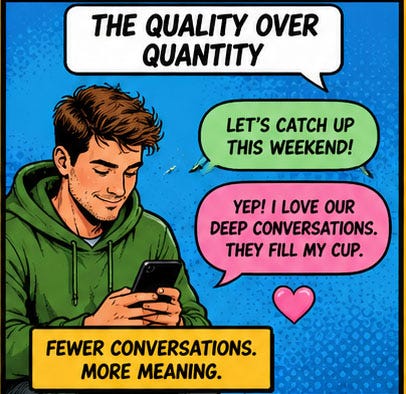
The Quality Over Quantity person values depth over frequency. They prefer meaningful conversations and real presence rather than constant contact. When they engage, they are fully there, offering attention and emotional substance.
Why Someone Might Communicate This Way
This style often comes from finding constant messaging draining or valuing depth over surface-level interaction. For them, responsiveness is about quality, not speed.
Most Compatible Styles
They pair well with the Planned Connector and the Space Enthusiast, and can also work with the Real-Time Responder.
Where It Can Clash
They may clash with the Daily Check-In or Over-Communicator, where expectations around frequency differ.
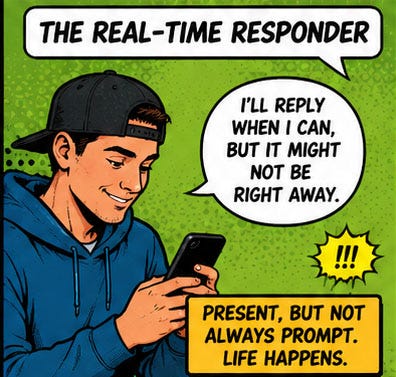
The Real-Time Responder
The Style
The Real-Time Responder replies when they have capacity. They may care deeply but not respond immediately, preferring to engage when they can be present rather than rushed.
Why Someone Might Communicate This Way
This style often reflects a demanding life, a need for focus, or a boundary around constant availability.
Most Compatible Styles
They pair well with the Quality Over Quantity person and the Space Enthusiast, and can work with the Planned Connector when expectations are clear.
Where It Can Clash
They may struggle with the Daily Check-In and Over-Communicator, where delayed responses can feel like distance.
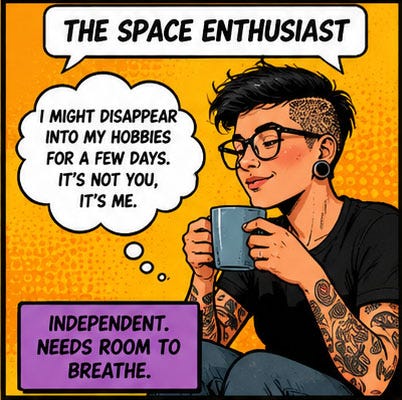
The Space Enthusiast
The Style
The Space Enthusiast needs room to breathe. Space helps them regulate, reconnect with themselves, and return to relationships with presence.
Why Someone Might Communicate This Way
This style may come from introversion, overstimulation, or a need for independence. It can also reflect avoidant tendencies, where distance feels safer.
Most Compatible Styles
They often work well with the Quality Over Quantity person and the Real-Time Responder, and can pair with the Planned Connector when space is respected.
Where It Can Clash
They may struggle with the Daily Check-In and Over-Communicator, where expectations around contact differ.
Compatibility Is Not About Being the Same
The most compatible communication style is not always the one that matches yours. Two people with the same style can still run into problems, while different styles can work beautifully with awareness and effort.
Compatibility comes from self-awareness, not sameness. The magic is not in finding someone who communicates exactly like you, but in finding someone who can talk about communication without turning difference into a character flaw.
When Your Style Becomes a Stress Response
Every communication style has a healthy version and a stressed version. The Daily Check-In can become anxious monitoring, the Over-Communicator can become overwhelming, the Planned Connector can become rigid, the Quality Over Quantity person can become distant, the Real-Time Responder can become inconsistent, and the Space Enthusiast can disappear.
Your communication style may protect something important, but it also asks something from others. That does not make your needs wrong, but it does mean they exist in relationship with other people’s needs.
How to Talk About Your Communication Style
The goal is not to announce your style like a warning label, but to communicate it in a way that gives others something to work with. Clear language creates understanding and reduces guesswork.
The Point
Everyone has a communication style, but the problem begins when people mistake their style for the universal standard. Your way of communicating may be valid and meaningful, but it is not the default setting for love.
The real work is learning what your style protects, what it asks from others, and where it begins to cause harm when left unexamined. Because if you cannot name your communication style, you will likely keep calling it “normal,” and everyone else will keep feeling like the problem.