



Recently, I found myself researching creator-driven fetish platforms. What began as a simple curiosity quickly turned into something much more interesting: a case study in power, labor, capitalism, and creative control.
My interest was never in becoming a traditional adult content creator. In fact, much of what I observed while researching these platforms reinforced why that work has never appealed to me personally. What did intrigue me was the possibility that there might be room for artistic expression within niche fetish markets.
Before becoming a relationship educator, I spent years studying and practicing portrait and boudoir photography. What I love about photography is the ability to tell a story through composition, lighting, texture, environment, and mood. A well-composed image can communicate vulnerability, beauty, playfulness, confidence, intimacy, or longing without requiring explicit nudity or sexual acts.
When I first began exploring fetish content platforms, I assumed there would be space for that kind of creativity. Foot fetish content, in particular, seemed like a natural fit. I imagined photos of dusty feet after a desert adventure, barefoot hikes through mountain meadows, feet submerged in alpine streams, or carefully composed images that emphasized atmosphere and aesthetic storytelling. From a creative perspective, I liked that I could create this type of content without showing my face, exposing my body, or performing acts that held no personal interest for me simply because someone else wanted to see them.
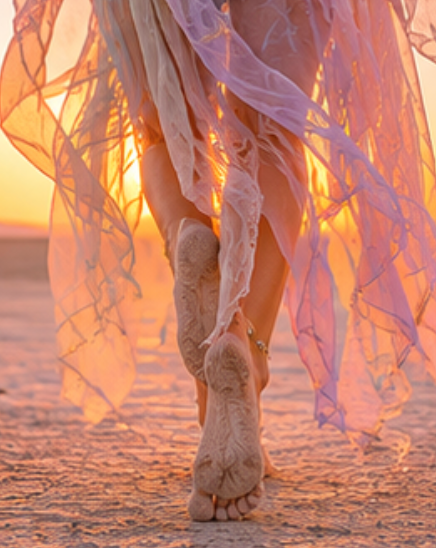
What I discovered instead was a marketplace where artistic vision often occupies a secondary role.
The economic center of gravity was not photography.
It was customization.
The most successful creators were frequently earning money through direct customer requests rather than through the sale of self-directed creative work. The content on their profiles functioned less like a portfolio and more like a menu. The photographs and videos served as evidence that they could deliver a particular experience. The real transaction began after the customer initiated contact.
That observation fundamentally changed how I understood the creator economy.
The Promise of Creator Ownership
Much of the public conversation surrounding platforms like OnlyFans centers on empowerment. Unlike traditional pornography studios, creators own their content, set their schedules, establish their boundaries, and keep a much larger share of their revenue. For many performers, these changes represent genuine improvements over previous industry models.
There is truth in that narrative.
Historically, adult performers often worked within highly structured systems where producers, directors, and studio executives exercised significant control over what was created. Creator-owned platforms appeared to offer a radically different arrangement. Technology would eliminate the middleman, allowing performers to connect directly with audiences and build businesses on their own terms.
At first glance, this seems like an extraordinary redistribution of power.
However, sociologists have long noted that power does not disappear when systems change. It often relocates.
The question is not whether creators have more control than they once did. Many clearly do. The more interesting question is where the pressures shaping that labor now originate.
Capitalism, Customization, and the Commodification of Intimacy
One of the defining characteristics of modern capitalism is its ability to transform increasingly personal aspects of human life into market transactions. Sociologists from Karl Marx to Arlie Hochschild have written extensively about commodification, the process through which things that once existed outside the marketplace become products that can be bought and sold.
In contemporary economies, we do not simply sell labor. We sell emotional labor. attention, access, and experiences. Entire industries are built around creating the feeling of personal connection between consumers and service providers.
Creator-driven pornography represents a fascinating extension of this process.
Customers are rarely purchasing a photograph alone. They are purchasing the opportunity to influence what is photographed. They are purchasing responsiveness, personalization, and feeling that content was created specifically for them.
This distinction matters because it shifts the creator’s role. The creator is no longer functioning solely as an artist producing work for an audience. They are increasingly functioning as a service provider responding to customer demand.
The result is a marketplace where creative decisions become intertwined with economic incentives.
A creator who produces only the content they personally find interesting may attract an audience.
A creator who consistently delivers highly personalized experiences often attracts customers.
Those are not always the same thing.
From a sociological perspective, this creates a tension between autonomy and market demand. Creators maintain the freedom to decline requests, establish boundaries, and define the limits of their participation. Yet the marketplace continuously communicates which choices generate revenue and which choices do not. Economic incentives exert pressure without requiring explicit coercion.
This is one of capitalism’s most effective mechanisms. People remain free to choose, while markets quietly reward some choices more heavily than others.
Within creator-driven adult content platforms, those incentives frequently reward customization over creativity, responsiveness over artistic vision, and customer satisfaction over self-expression.
The studio executive may be gone.
The audience has become the director.
Author’s Note: As of July 7, 2026 FeetFinder.com has issued me a refund for my lifetime membership that I do not intend to use.